
Last updated: October 16, 2026 (Central time). Restored both official dinner-video players and added verified publication and duration context. The crab-source text and three FAQs were reviewed October 15; cultural-source pages October 14. Original publication: August 31, 2014. No new meal, recipe or filming date is verified.
This ExploreTraveler photo story shows chili crab in Taiwan and was first published on August 31, 2014. The original caption says, “You can never have too much.”
The archive does not name the restaurant or record a recipe. The photograph preserves the dish as it was presented; it does not establish the crab species, ingredients or regional origin.
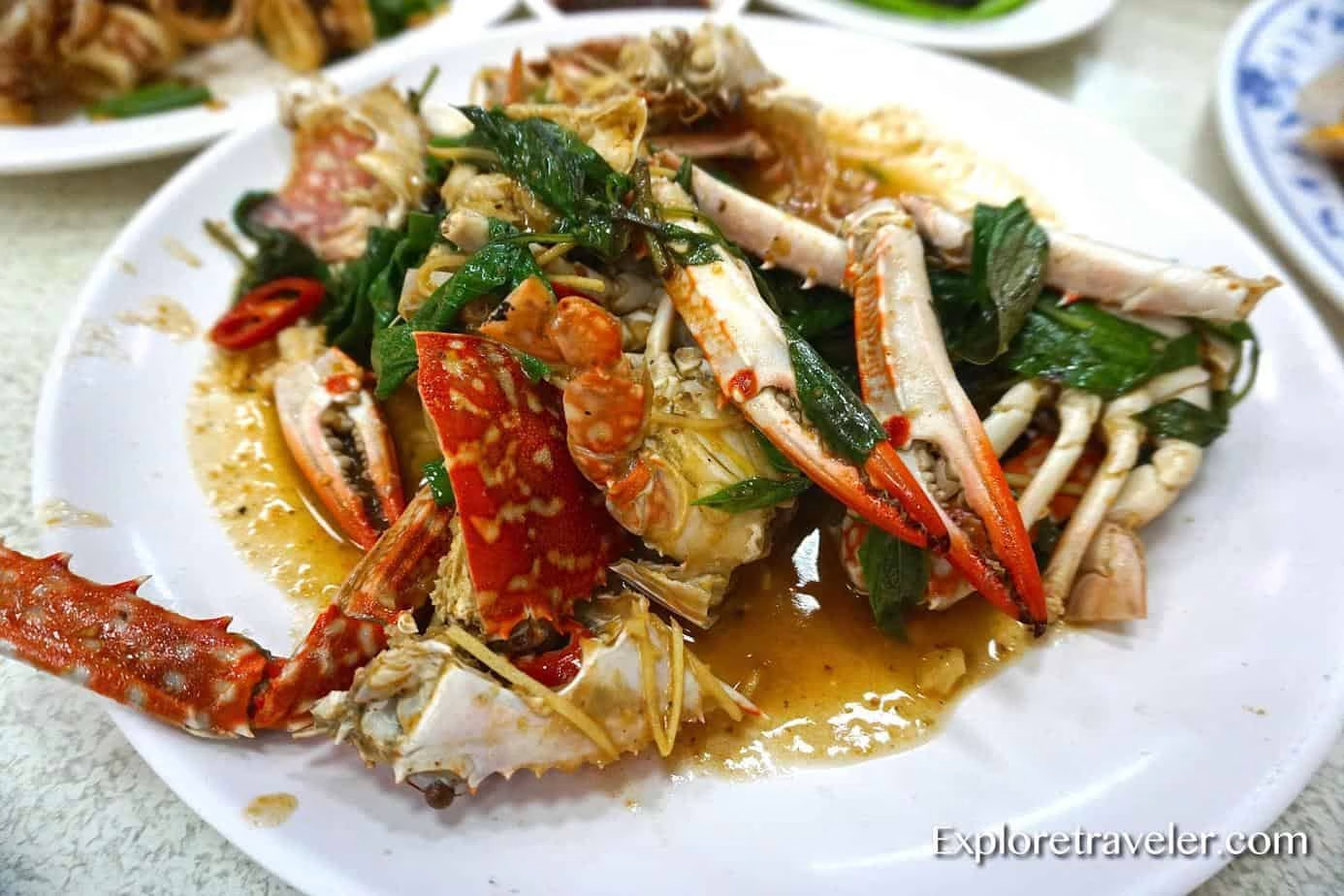
Chili crab in ExploreTraveler’s earlier Taiwan writing
Our related article Chili Crab: Taiwan’s Taste Of Singapore, published in February 2015, gives this photo story a more food-specific companion. That article describes crab coated in a sweet, spicy chili sauce and slowly stir-fried so the flavors mingle. It also describes a steamed bun served alongside the crab to complement the sauce.
The sauce and its accompaniment are central to that older description: the crab is not presented simply as plain seafood with a garnish. The writer emphasizes delicate flavors alongside stronger spices, with the bun forming part of the meal. Those are details from the separate 2015 account, not ingredients or a serving arrangement established for John’s 2014 photograph.
Other crab preparations in our food archive
ExploreTraveler’s 2018 feature Sea Food Dishes From Around The World describes a different hot-and-spicy crab preparation from Taiwan, with crab legs, mushrooms, spices and soup, accompanied by fried mud clams. In a separate Singapore section, it describes stir-fried crab in a thick, savory tomato-and-chili sauce with a sweet tang, and calls that preparation mild tasting.
Read together, these accounts describe more than one way of serving crab: sauce-coated crab with a bun, a spicy crab-and-mushroom soup meal, and a tomato-based Singapore preparation. They are separate entries in our food writing, not one recipe or one documented meal. Follow the original articles for those broader accounts while keeping this page centered on the preserved Taiwan photograph.
Taiwanese food culture
Taiwanese cooking has developed through migration, local ingredients and changing social conditions. The National Museum of Taiwan History describes how Fujian, Cantonese and Hakka food traditions arrived with Han migrants, followed by Japanese and Western influences during Japanese rule and further regional Chinese influences after World War II. These traditions blended and changed in Taiwan rather than forming a single uniform style. See the museum’s history of Taiwan’s dietary culture.
That wider history gives this food photograph context. It does not identify the preparation of this particular plate of crab. John’s original photograph and caption remain the firsthand record; the cultural background here is researched context.
ExploreTraveler’s archived dinner videos
These are the two dinner videos originally linked in this photo story. Their upload records do not identify a location, filming date or community, or establish that the photographed crab appears in either video. Actual playback remains unverified.
Aboriginal Dinner — part 1
ExploreTraveler published part 1 on July 3, 2014. It runs for 1 minute 53 seconds.
Additional YouTube fallback: Aboriginal Dinner — part 1 (opens on YouTube).
Aboriginal Dinner — part 2
ExploreTraveler published part 2 on July 3, 2014. It runs for 2 minutes 3 seconds.
Additional YouTube fallback: Aboriginal Dinner — part 2 (opens on YouTube).
Night-market snacks and seafood
Taiwan’s Tourism Administration lists oyster omelets, fried rice noodles, Danzai noodles, spring rolls and braised pork rice among Taiwan’s snack foods. Its guide describes night markets as places to explore local specialties, with each market having its own character. Use the official Taiwan night-market guide to choose places to investigate; individual vendors, menus and opening times should be checked for the date of your visit.
This crab photograph is part of that broader food-travel archive. It is not a current restaurant recommendation or a claim that this exact dish is available at a particular night market.
Frequently Asked Questions
Where in Taiwan was this chili crab served?
The original archive identifies Taiwan but does not name a city, restaurant or vendor. John’s caption, “You can never have too much,” records the food-photo moment without giving a location precise enough for a restaurant recommendation.
How does the related 2015 article describe chili crab and its accompaniment?
ExploreTraveler’s 2015 Taiwan article describes crab in a sweet, spicy chili sauce, slowly stir-fried so the flavors mingle, and a steamed bun that complements the sauce. That is the separate article’s description; the 2014 photo caption does not establish an exact recipe or confirm that a bun accompanied the photographed plate.
Do all the crab dishes in ExploreTraveler’s archive use the same preparation?
No. The 2018 seafood feature distinguishes a hot-and-spicy Taiwan crab-and-mushroom soup meal from a Singapore section describing crab in a thick tomato-and-chili sauce with a sweet tang. The 2015 story also discusses sauce-coated crab and a steamed bun. These older descriptions show variation within the archive; they are not a single recipe or proof of the preparation shown in this photograph.
Continue exploring Taiwan
- Haishengping Bay, Green Island: viewpoint photo guide — another preserved Taiwan photo story, with official visitor sources.
- More ExploreTraveler stories from Taiwan — food, culture and destination reading from the archive.
Original photo references
The original article included these ExploreTraveler Facebook photo references: first photo post and second photo post. Facebook may require sign-in to view them.
Food-culture source pages rechecked October 14, 2026. The original photograph and caption remain the firsthand material; the historical background is separately researched. Original publication: August 31, 2014.



Pingback: Taiwan Food South of Kaohsiung: Archived ExploreTraveler Video